
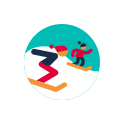
1. Pay attention to the riders next to you
Ride and behave so as not to harm the people around you. Remember that you are responsible both for your behavior on the track and for the condition and serviceability of your equipment.
For us, skiing culture begins with following the principles known around the world as the 10 FIS (Federation Internationale de Ski) rules. They help prevent accidents on the slopes and create a respectful atmosphere at ski resorts everywhere. We want skiers and snowboarders in Ukraine to take the Rider Code just as seriously and protect everyone’s right to enjoy their time at the resort.
It starts with us. Join us in standing up for the Code.
Ride and behave so as not to harm the people around you. Remember that you are responsible both for your behavior on the track and for the condition and serviceability of your equipment.

Choose the slope level that corresponds to your physical and technical capabilities. Pay attention to the weather conditions, the flatness and preparedness of the slope, and the number of people on the track.
Be ready for a quick stop, change of trajectory or radius of turn. Slow down in crowded areas, in conditions of limited visibility, at the edge of a steep slope, at the bottom of the track and on the approach to the lift.
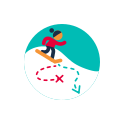
If you ride higher on the slope, choose a path that will not interfere with the movement of riders below. In the event of a collision, the responsibility lies with the skier or snowboarder who was descending behind. Maintain a safe distance to give yourself room for a necessary manoeuvre and allow the rider in front to move freely.
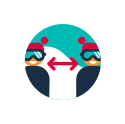
You can overtake on the track from any side if you keep a safe distance. When you overtake someone, from the beginning to the end of the manoeuvre, you are responsible for not creating problems for other riders. This rule also applies to passing people who are not moving.

Before starting, entering the track or crossing a slope, look up and down along the track to make sure you will not create a dangerous situation with your manoeuvre. Riding on steep sections requires increased attention — it is especially dangerous here.
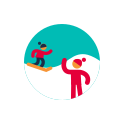
Avoid stopping on bends and steep sections of the slope unless there is an urgent need. If you fall, leave the dangerous area as soon as possible. Standing or sitting in narrow places on the slope is also not recommended.
Where should you stop? It is best to stand at the edge of the track facing it, especially on narrow tracks. On very wide tracks, you can stop in the middle of the slope, but this increases the risk of a dangerous situation. If you stop with a group, stand close together and do not spread out across the slope.
You may walk up or down only along the edge of the track. Walking through the centre of the slope damages its surface and can create a dangerous situation for you and other riders. Remember — we look after one another.
If there is fog, you should not move along the slope on foot at all.
On the slopes, you must follow all rules and instructions you encounter: signs, markings, information boards, posters, arrows, flags and barriers around dangerous areas — all are there for your safety. It is strictly forbidden to enter tracks and slopes closed by barriers, avalanche danger signs or warning signs.

It is your responsibility when an accident happens. Do not pass someone lying motionless on a slope. In this or any similar situation, you must help: call rescuers and mark the scene with skis or a snowboard to warn other riders.

Remember: every skier and snowboarder who witnesses or is involved in an accident must provide personal details, including their full name and contact phone number.
Why is this important? Accidents on the slopes may be treated as insurance cases and can sometimes involve civil or criminal liability. Your testimony or photographs can help the police and rescue services prepare the most detailed report possible.